Routes
GRANADA / MONUMENTS
MONUMENTS FEATURED

M o n u m e n t a l G r a n a d a : T h e G o l d e n A g e

" Three Renaissance monuments in the heart of the historic center: the Cathedral where Diego de Siloé redefined Spanish architecture, the Royal Chapel with the actual lead coffins of… "

Duration 5h
Distance 3.5km
Difficulty Easy
Best time Morning
MONUMENTS VOL. I · 2026 37°10′N 3°36′W
01
[ About the route ]

Description

Three Renaissance monuments in the heart of the historic center: the Cathedral where Diego de Siloé redefined Spanish architecture, the Royal Chapel with the actual lead coffins of the Catholic Monarchs in the original crypt, and the Monastery of San Jerónimo — the pantheon of El Gran Capitán and Siloé's masterpiece.

When the Catholic Monarchs entered Granada on January 2, 1492, the most important Arab city in Western Europe passed into Castilian hands. The architectural program that followed was not merely urban: it was a declaration of power and identity. The Royal Chapel was the first commission — the personal mausoleum of Fernando and Isabel, completed in 1517, four years after her death. The Cathedral started as Gothic, like all Reconquest cathedrals, but in 1528 Diego de Siloé arrived with something radically new: the centralized plan inspired by early Christian Rome, the dome over the apse, light as protagonist. This is the moment Spain embraced the Italian Renaissance without copying it — transforming it. The Monastery of San Jerónimo is the third vertex of this triangle and the least visited: this is where Gonzalo Fernández de Córdoba, El Gran Capitán, the general who won the Kingdom of Naples for the Spanish Crown, is buried. His widow funded the final construction in exchange for that burial. Siloé also worked here. Three monuments, one architect as the common thread, and the exact moment Granada transformed from the last Nasrid capital into a Spanish imperial city.
Neighbourhoods:
02
[ ITINERARY ]

The itinerary

01

Granada Cathedral — Gran Vía de Colón, 5

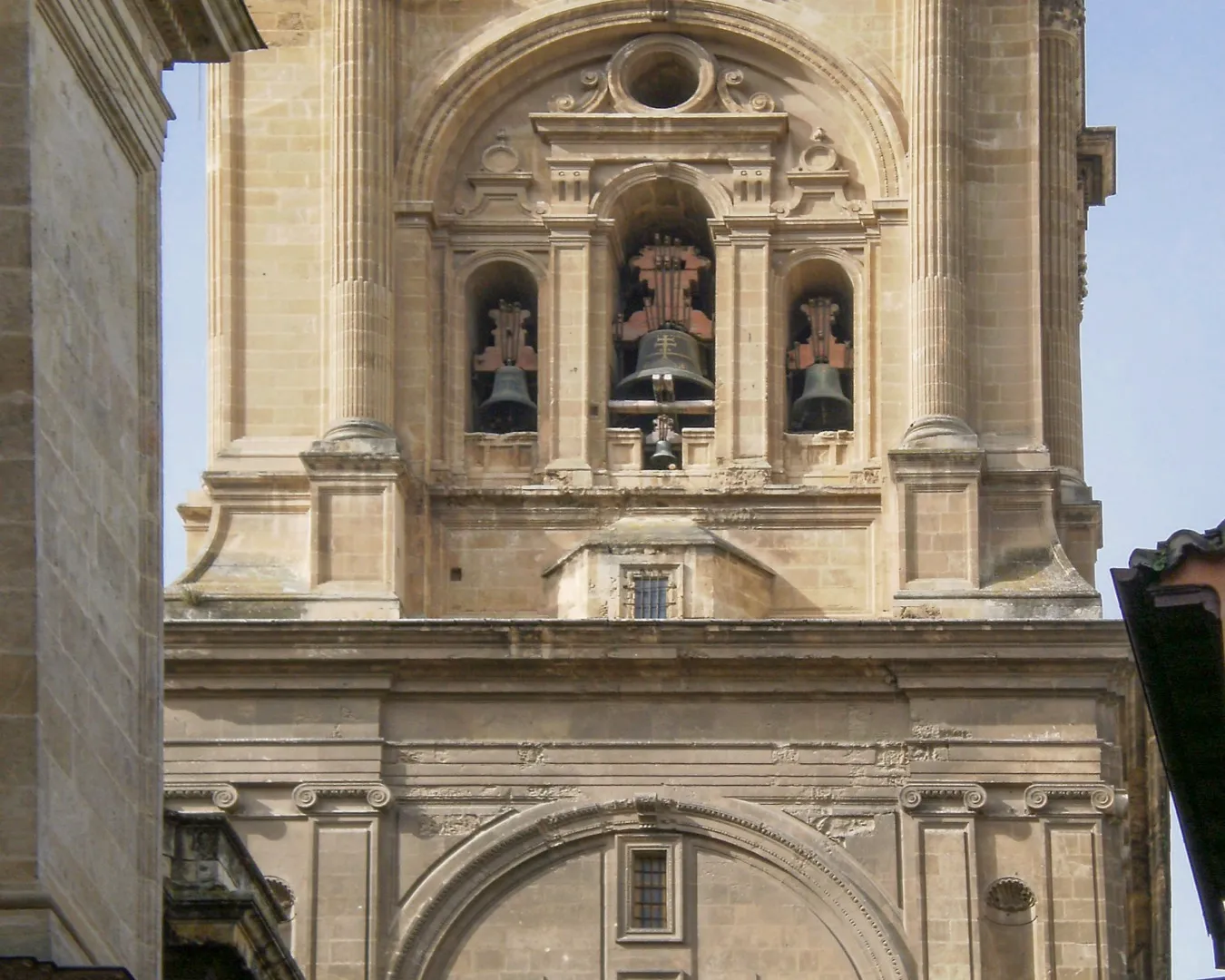
In 1528 Diego de Siloé took over from Enrique Egas and transformed the original Gothic plan into the first Renaissance cathedral in Spain. His masterpiece here is the Capilla Mayor: a hemispherical dome with ten ribs over a cimborrio completed in 1557, flooding the space with light through enormous circular windows. Siloé died in 1563 without seeing it finished. The main facade is later and Baroque — Alonso Cano's work from 1667. Admission: €10 (reduced €8). Hours: Mon–Sat 10:00–18:15, Sun 15:00–18:15.

02

Royal Chapel — Calle Oficios, s/n

Built between 1505 and 1517 by Enrique Egas in Isabelline Gothic style as the personal mausoleum of the Catholic Monarchs. At the center of the transept: the marble sepulchres of Fernando and Isabel — by Domenico Fancelli — and those of Joanna I and Philip I, by Bartolomé Ordóñez. But the royal bodies are not in them: they lie in the crypt below, in lead coffins with their initials engraved on the lids. The former sacristy is now a museum with Isabel's personal collection: van der Weyden, Dierick Bouts, and — easy to miss — the only Botticelli with religious subject matter in Spain, "The Prayer in the Garden". Admission: €5 (reduced €3.50). Hours: Mon–Sat 10:15–18:30, Sun 11:00–18:00.

03

Monastery of San Jerónimo — Calle Rector López Argüeta, 9

The first Christian monastery founded in Granada after the Reconquest, in 1504, on land believed to have belonged to Boabdil. Diego de Siloé took over construction in 1526 and transformed the initial Gothic project into his most complete Renaissance work. It was funded by María de Manrique, widow of El Gran Capitán Gonzalo Fernández de Córdoba, in exchange for burial in the main chapel — where he rests alongside her. The 1519 Isabelline Gothic cloister, with 36 columns and a courtyard of orange trees, contrasts with the grandeur of the Renaissance church. Far less visited than the Cathedral and Royal Chapel. Admission: €7 (children under 10 free). Hours: 10:00–13:00 and 16:00–19:00 (closes for siesta).

03
[ Recommendation ]

Local tips

Start at 10:00 to beat queues

The Royal Chapel opens at 10:15 and in high season queues build to 20–30 minutes from 11:00 onward. Arrive at the Cathedral right when it opens (10:00), move on to the Royal Chapel when done, and you'll enter without waiting.

The Botticelli nobody notices

In the Royal Chapel's sacristy-museum hangs a "Prayer in the Garden" by Sandro Botticelli — the only Botticelli with religious subject matter in Spain. It's displayed without much fanfare. If you don't look for it deliberately, it's easy to walk past.

The Monastery closes for siesta

San Jerónimo closes between 13:30 and 16:00. If you arrive after midday, plan the visit from 16:00 onward — or start early and cover all three monuments in a single morning.

On Sundays the Royal Chapel is closed in the morning

The Royal Chapel does not open until 11:00 on Sundays (vs. 10:15 other days) and may close temporarily for liturgical celebrations without notice. Confirm hours at capillarealgranada.com.

04
[ Practical information ]

Route information

Starting point

Granada Cathedral, Gran Vía de Colón 5. Walk from Plaza Nueva (5 minutes) or take bus lines C1, C2, 4, 9, 11, 33.

Ending point

Monastery of San Jerónimo, Calle Rector López Argüeta 9. From here it is a 10-minute walk back to the center.

How to get there

All three monuments are within 400 meters of each other in the historic center. Park at the Plaza Nueva or Gran Vía car parks. By public transport, any bus passing through Gran Vía or Plaza Nueva drops you nearby.

Estimated budget

€22 per person in admissions (Cathedral €10 + Royal Chapel €5 + San Jerónimo €7). Add €5 for water and a coffee between monuments.

Who is it for

Essential for lovers of art, history, and architecture. Ideal for cultural visitors who want to understand the Spanish Renaissance. Also suitable for teenagers interested in history. Not recommended for very young children (silent monuments with no children's activities).

Accessibility

The Cathedral has a ramped entrance. The Royal Chapel has lift access on request. San Jerónimo has steps at the main entrance; there is an alternative entrance through the cloister. None of the three has a free audio guide.

Best time to visit

Start at 10:00 sharp. In high season (Easter Week, July–August), buy tickets online in advance. Tuesday mornings are usually the quietest days.

[ Tags ]
#monumentos#historia#renacimiento#arquitectura#reyes-católicos#gran-capitán#diego-de-siloé