Granada has a reputation for being expensive because the Alhambra costs €19. That's the one expensive thing. The rest of the city — its monuments, viewpoints, neighbourhoods, and food — operates on a different logic to any other Spanish city: here they still put real food in front of you with every drink.
This guide is for those travelling on a tight budget, for those who want to understand the city beyond the tourist circuit, or for anyone who already has the Alhambra booked and wants to know what else they can do without spending anything more.
1. The tapa: the system that changes everything
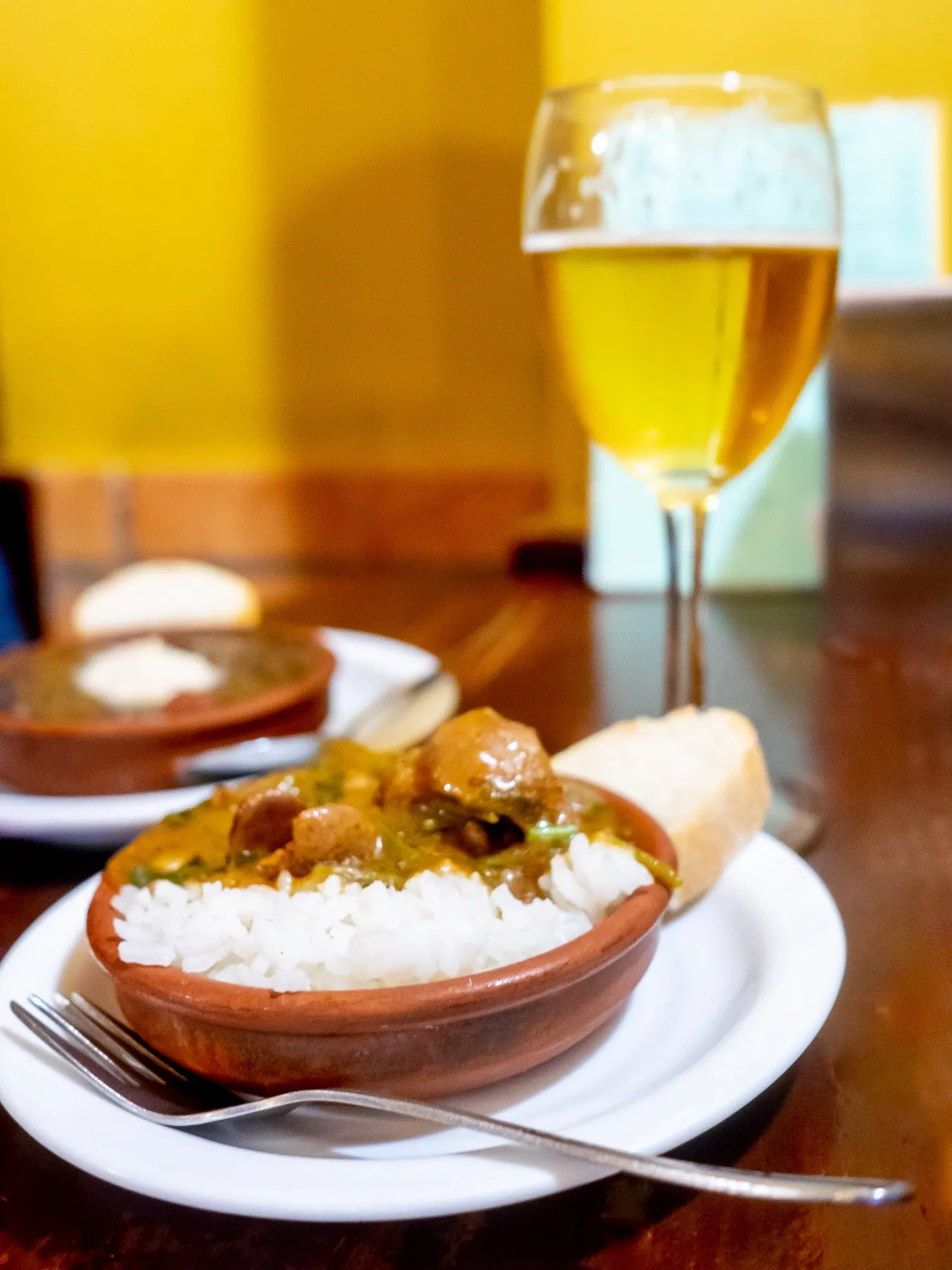
In Granada, when you order a drink at most bars, they bring you food. Not peanuts or tinned olives: a proper cooked tapa. It might be a slice of omelette, some pasta, half a portion of croquetas, a small sandwich. At some bars, with your second drink they ask what you want.
Two beers or two soft drinks equals, at many bars in the centre, a decent meal. For €4–6 per person.
This isn't a myth or an exaggeration: it's been the real way of life in Granada's hospitality trade for generations, and it remains the norm — not the exception — in the real neighbourhoods.
Where the system works
- Calle Navas and surroundings: the most concentrated tapas-bar zone. Any bar without a tourist terrace.
- Realejo neighbourhood: quieter, fewer tourists, generous tapas. Bars around Campo del Príncipe.
- La Chana and Zaidín: where locals go for tapas. Larger portions, lower prices, no tourism.
- Calle Elvira: a mix of neighbourhood bars and more contemporary spots. Avoid any with a menu in several languages stuck in the window.
Where it doesn't work
Restaurants with elaborate menus, tourist plaza terraces (Plaza Nueva, Plaza Bib-Rambla), anywhere within 200 metres of the Alhambra. There you pay for food separately, like in any other city.
2. Free monuments and museums
The usual mistake is thinking the Alhambra represents Granada. The Alhambra is one — magnificent — part of the city. But there's more historical heritage accessible without a ticket:
El Bañuelo — Carrera del Darro, 31
The oldest and best-preserved Arab baths in Spain. Built in the 11th century, during the Caliphate period. The star room — the star-shaped skylights that filter light down through the vaulted ceiling — is one of the most beautiful interiors in the city, and it doesn't appear on any list of Granada's top ten sights.
Free entry. Open Tuesday to Saturday, 10:00–14:00. Closed Mondays and Sundays.
Corral del Carbón — Calle Mariana Pineda, s/n
The only surviving Nasrid caravanserai on the Iberian Peninsula. A 14th-century inn where merchants rested and stored their goods. The entrance arch is among the finest examples of Nasrid architecture outside the Alhambra. The interior courtyard is one of the most photogenic spots in the centre.
Free entry every day, 9:00–20:30.
Madraza de Granada — Calle Oficios, 14
Granada's ancient Islamic university, founded in 1349 by Sultan Yusuf I. Now owned by the University of Granada. The prayer hall with its restored muqarnas dome is extraordinary. Most tourists walk past without knowing what's inside.
Free entry Monday to Friday, 10:00–14:00. Closed at weekends.
Capilla Real — Calle Oficios, 3
The mausoleum of Ferdinand and Isabella, the Catholic Monarchs who took Granada in 1492. Normally requires a ticket (€5). Free entry on the first Sunday of every month. The sacristy holds Isabella I's personal belongings — her jewellery, crown and sceptre — displayed in glass cases. Also the sarcophagi of Philip the Handsome and Joanna the Mad.
Granada Cathedral
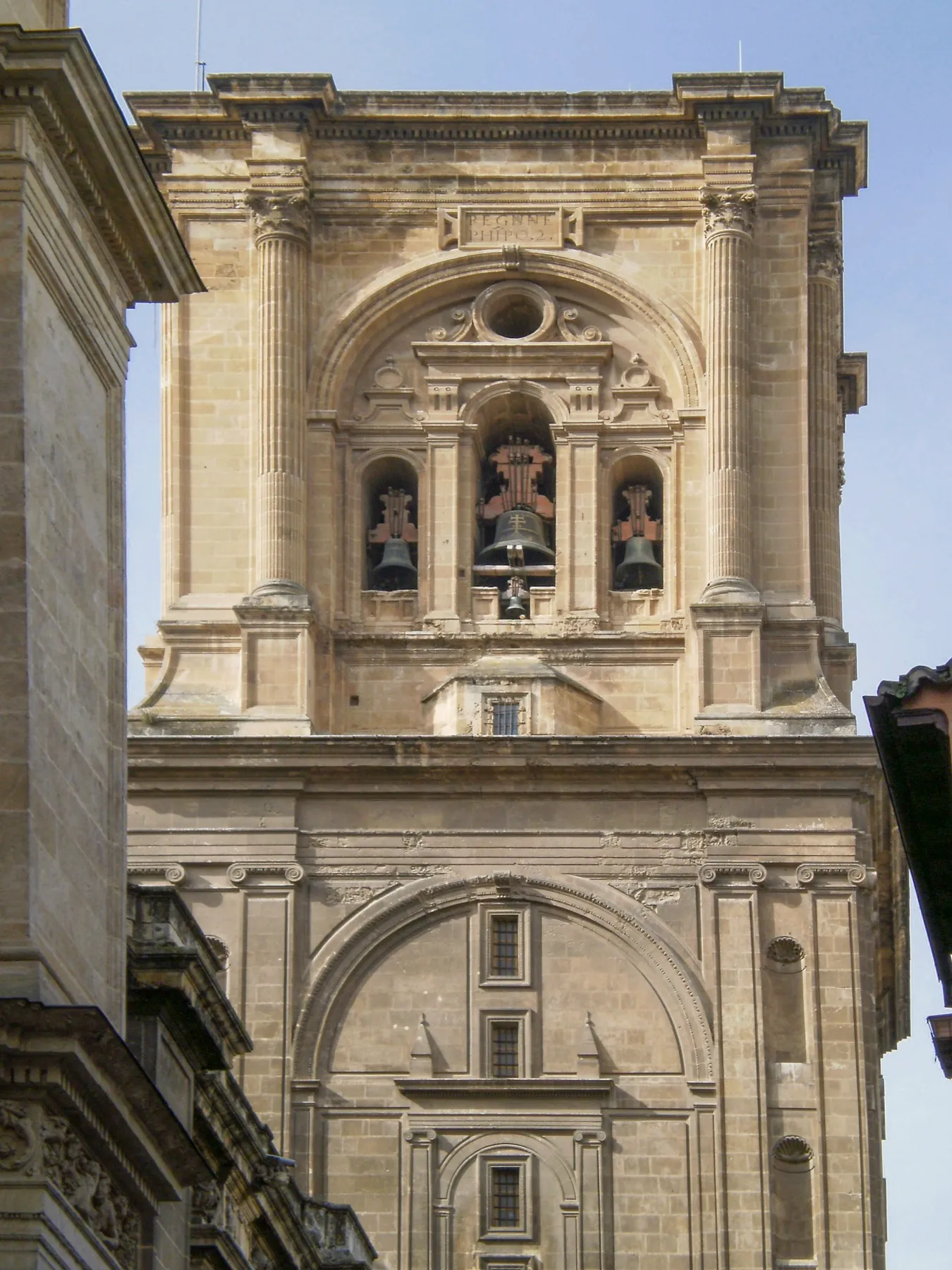
One of the first Renaissance cathedrals in Spain, built over the Nasrid grand mosque. Entry is paid (€5) but the main facade, the Sagrario front and access to the rear plaza are always free. The contrast between the baroque facade and the classical interior is worth seeing from outside.
Casa de los Tiros museum
Several municipal museums have permanently free entry. The Museo Casa de los Tiros (Granada history, 16th century) is free every day. Check the Patronato de la Alhambra website for current opening hours.
3. Viewpoints: the city's most spectacular free attraction
Granada has half a dozen viewpoints with direct views of the Alhambra, the city or Sierra Nevada. All free, all open air, most of them in the Albaicín.
Mirador de San Nicolás
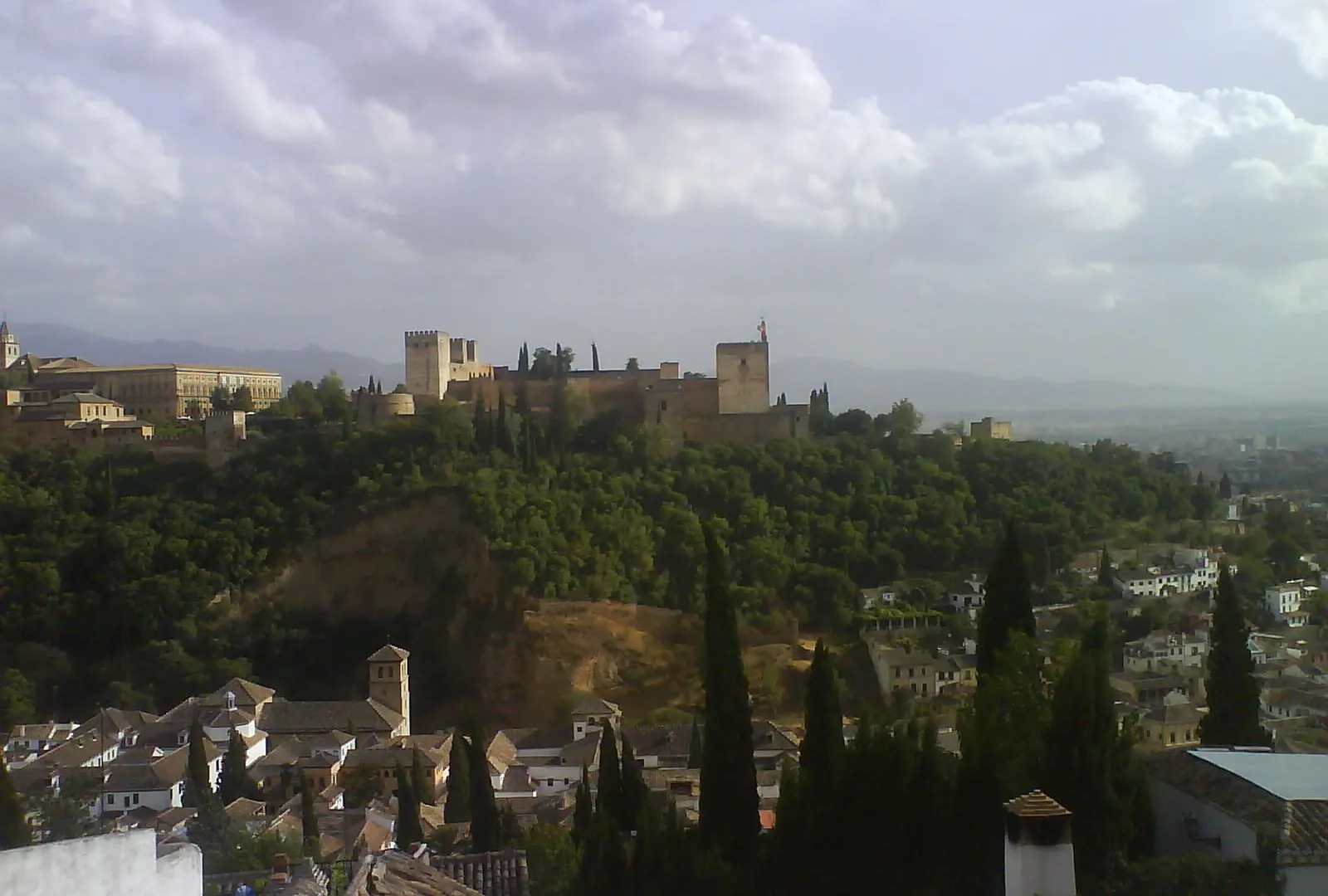
The most famous. Frontal views of the Nasrid Palaces with Sierra Nevada behind. At sunset, the Alhambra turns orange and people sit on the church steps to watch. It's the only viewpoint with its own atmosphere at any hour of the day.
Arrive early (before 9:00) to see it without crowds. At sunset, wait until the sun drops completely — the half-hour between sunset and full dark is the best.
Mirador de San Cristóbal
Higher up in the Albaicín, less well known. Views towards Sacromonte and the lower city. The access is steeper but there are fewer people and the angle to the Alhambra is different — more lateral, with more city context.
Mirador de Santa Isabel la Real
Two minutes from San Nicolás. Almost always empty. Similar views but from a slightly higher angle and without the tea terraces that surround San Nicolás. The quiet is part of the appeal.
Camino del Sacromonte viewpoint
On the path between the Albaicín and Sacromonte. Views down to the Darro river and the Generalife from above. No tourist signs, no terrace — just the path and the landscape.
Paseo de los Tristes
Technically not a viewpoint, but the riverside walk along the Río Darro with the Alhambra directly overhead is one of Granada's most characteristic scenes. Free, always open, best first thing in the morning when tourists are still sleeping.
4. The Albaicín and Sacromonte as destinations in themselves
Walking up to the Albaicín without any specific destination is an activity in itself. The medieval Arab quarter — a UNESCO World Heritage Site since 1994 — has a street layout that invites getting lost: cármenes with walled gardens, Arab-inscribed fountains, medieval chapels, cats sleeping on cobblestones.
The climb from Paseo de los Tristes (up Carrera del Darro) takes 20 minutes on foot. Along the way: El Bañuelo, the Aljibillo bridge, Nasrid walls visible above rooftops.
Sacromonte — the cave neighbourhood — has a different rhythm. The Camino del Sacromonte, which climbs from the river, leads to caves converted into flamenco venues and to the Sacromonte Abbey (free entry on Sundays). The views from the top — Alhambra, Albaicín, Granada's plain — are the widest in the city.
5. The Alhambra forest: what almost nobody knows is free
The Alhambra as an archaeological site has paid entry. But the forest surrounding it — the Bosque de la Alhambra, planted by the Nasrids and extended in the 19th century — is open access all day, every day.
Enter through the Puerta de las Granadas (at the top of Cuesta de Gomérez, 10 minutes' walk from the Cathedral). From there, dirt paths through cypresses, elms and poplars lead to spots with partial views of the complex. There are also Arab fountains, the Pilar de Carlos V, and access to the Generalife's outer gardens.
An hour wandering through the forest, with the Alhambra visible between the trees, is one of the city's most authentic experiences — and 90% of visitors don't know it exists.
6. Free culture: music, markets and open spaces
Music in public spaces
In summer, Granada's city council runs free concert cycles in central squares: jazz, flamenco, classical music. Plaza de Bib-Rambla and Paseo del Salón are the usual venues. Check the municipal events calendar before you visit.
The Alcaicería market
The reconstructed souk beside the Cathedral. Walking in, looking around and feeling the original 14th-century Arab street grid costs nothing. Buying crafts here is expensive — prices are firmly in tourist territory. The interest is architectural and historical, not commercial.
Zaidín street market
A neighbourhood market, Thursdays and Saturdays. Nothing touristy: clothes, fruit, spices, odds and ends. An hour here tells you more about what Granada is really like than any souvenir shop.
Exhibitions at CajaGranada Cultural Centre
Temporary exhibitions frequently free to enter. Contemporary architecture building by the Río Genil. Check their website for current programming.
7. What does cost money — and is worth spending it
None of this replaces the Alhambra. The Alhambra at €19 remains one of the most extraordinary monuments in the world, and the price is ludicrous for what it is. The problem isn't the cost — it's that tickets sell out.
If the Alhambra is booked and you want to spend a bit more: the Nasrid Palaces night visit (€19, Fridays and Saturdays) is completely different from the daytime visit. Fewer people, theatrical lighting, silence impossible during the day.
If the Palaces are sold out and only Gardens + Generalife remain (€7): it's still worth it in spring. The gardens in April and May, with running water and flowers, justify the trip in their own right.
Summary: a full day in Granada spending nothing (or almost nothing)
- 08:30 — Paseo de los Tristes in silence. Coffee at the bar on the paseo.
- 09:30 — Climb to the Albaicín via Carrera del Darro. El Bañuelo if it's Tuesday–Saturday.
- 11:00 — Mirador de San Nicolás and Santa Isabel la Real.
- 13:00 — Back down to the centre. Two drinks with tapas on Calle Navas or in Realejo.
- 16:00 — Corral del Carbón + Madraza (if it's a weekday). Walk through the Alcaicería.
- 18:00 — Alhambra forest: enter via Puerta de las Granadas, an hour on the paths.
- 20:30 — Back to the centre. Another round of tapas.
- 22:00 — Plaza Bib-Rambla or Realejo. Or climb to Sacromonte to see the skyline at night.
Total day cost: €8–12, split between coffees and drinks. Not counting transport to Granada or accommodation. The tapa system makes it possible.