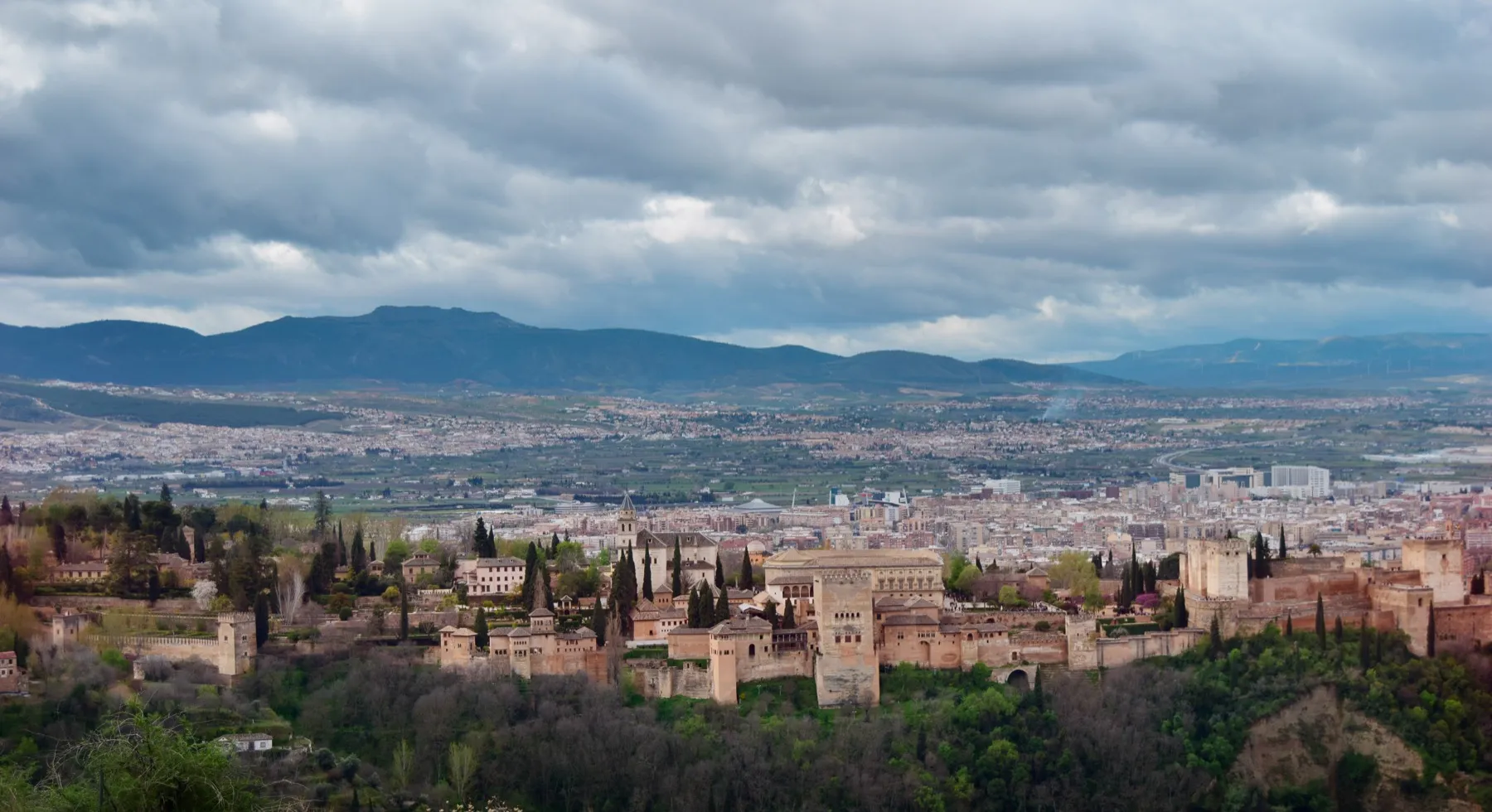
Sierra Nevada is 32 kilometres from Granada city centre. On clear days — which in Granada is most of them — you can see it from the Mirador de San Nicolás with snow on top even when it's 20 degrees in the city. It's the highest mountain range on the Iberian Peninsula outside the Pyrenees, and many visitors to Granada don't realise they can get there by bus in 45 minutes.
This guide covers both versions: Sierra Nevada in winter (ski resort) and Sierra Nevada in summer and autumn (hiking, Mulhacén, the Veleta route). They're completely different experiences that call for completely different planning.
The essentials before you head up
Sierra Nevada is not a casual weekend mountain. The Veleta (3,394 m) and Mulhacén (3,478 m) are the highest peaks on the Iberian Peninsula outside the Pyrenees. Weather can change in minutes. In summer, a clear morning can turn into a thunderstorm by 14:00 with almost calendar-like regularity.
Always bring warm layers even if you leave Granada in a t-shirt. The temperature difference between Granada (700 m) and the summits (3,400 m) is 15–20 degrees. In July, Granada might be 38°C while the summit sits at 18°C with wind.
Winter season: the ski resort
Sierra Nevada has the highest ski resort in Western Europe and one of the longest seasons: normally December to April, with some years extending to May. In good snow years, there's skiable snow into late April while Granada's streets are already full of spring flowers.
The resort: Pradollano
The resort village is called Pradollano, at 2,100 metres altitude. It has hotels, apartments, restaurants and all the services of a mid-size alpine resort. Skiing there isn't like the Alps — the landscape is drier, the runs generally wider and less technical — but it has something no alpine resort has: on clear days, you can see the Mediterranean Sea 80 kilometres away from the slopes.
The slopes
110 kilometres of ski runs, 130 kilometres including snowboard channels and specialist areas. Breakdown:
- Green (easy): concentrated in the Borreguiles zone, direct access from the main chairlift. Perfect for beginners and those who haven't skied for years.
- Blue (intermediate): most of the skiable domain. The Laguna de Yeguas sector has the best views.
- Red and black (difficult): the Veleta descents and El Río sector. Exposed rock in low-snow seasons.
Lift passes and prices
A day lift pass in high season (January–February) runs €42–52. In mid-season (December, March) it drops to €35–45. Always cheaper bought online in advance from the official Sierra Nevada website than at the ticket office.
Full equipment hire (skis, boots, poles, helmet) runs €25–35/day at resort shops. Several shops in Granada city offer the same service at 20–30% less — pick up the equipment in Granada and take it up on the bus or in your car.
Ski lessons
The Sierra Nevada Ski School operates at the resort. Group lesson of two hours: €30–35. Private lesson: €55–70/hour. For beginners, a half-day introductory lesson is recommended before attempting any run independently.
Summer and autumn: hiking and high mountain
Between May and November, Sierra Nevada becomes a high-mountain national park. The chairlifts and ski runs disappear and are replaced by hiking trails, ibex, golden eagles and the silence of the summits. This is the least-known season for city visitors and the most extraordinary for those coming to walk.
Mulhacén: the highest peak on the peninsula
3,478 metres. Climbing Mulhacén from the Hoya de la Mora car park (2,500 m) is 4 kilometres of marked trail with 1,000 metres of elevation gain. One way only. The full route — there and back — takes between 5 and 7 hours depending on pace and stops.
In July and August, private vehicles are banned from the Veleta road beyond a certain point. There's a shuttle bus system from the Hoya de la Mora car park that goes up to 3,200 metres. From there, the summit is 45 minutes' walk.
Essential for Mulhacén: set off before 8:00, warm layers even if it's hot below, food for the whole day, at least 2 litres of water, high-factor sun cream and sunglasses. Summer storms typically build from 13:00 — you need to be heading down before then.
The Veleta: Europe's highest road
3,394 metres. The paved road reaching almost to the Veleta summit is the highest mountain road in Western Europe. In summer when it's open, the Veleta cycling climb is one of the most popular challenges on the Peninsula: 52 kilometres from Granada with 2,700 metres of accumulated elevation.
On foot, from the Hoya de la Mora car park to the Veleta it's 6 kilometres and around 2.5–3 hours of walking.
More accessible routes (no high mountain)
You don't need to summit anything to enjoy Sierra Nevada in summer. There are routes for all abilities from Pradollano and from the Alpujarra villages:
- Laguna de las Yeguas: from the Hoya de la Mora car park, 2 km one way (35–40 min). A mountain lake at 2,800 m. Easy, spectacular, suitable for children.
- Robledales trail: in Sierra Nevada's lower zone, from Güéjar Sierra. Oak forest, river, accessible year-round. 8 km circular.
- Vereda de la Estrella: one of the most famous trails in Andalusia. From Güéjar Sierra to the Peñón Negro glacier. 12 km one way, spectacular in all seasons.
Wildlife: ibex and golden eagles
Sierra Nevada has one of Spain's densest populations of Iberian ibex. In the summit zone, between 2,500 and 3,400 metres, it's almost impossible not to see groups of males with their curved horns. The area is also home to golden eagles, reintroduced bearded vultures and griffon vultures.
How to get there from Granada
By bus (the most straightforward option)
Alsa runs a direct Granada–Pradollano service in ski season, and a service to Güéjar Sierra year-round. The Granada stop is at the bus station (next to the train station).
Ski season (December–April): departures from Granada at 8:00, 9:00 and 10:00. Returns from Pradollano at 16:30, 17:30 and 19:30. Journey time: 45–55 minutes. Price: €10–12 return. Buy online in advance during high season.
Outside ski season: the bus goes up to Güéjar Sierra (base village for several hiking routes). To reach the Hoya de la Mora car park you need a car or taxi.
By car
From Granada, the A-395 road goes directly to Pradollano in 45 minutes (32 km). In ski season, parking at the resort costs €8–12/day. In summer, the Hoya de la Mora car park is free.
In winter: bring snow chains or check your car has winter tyres. The DGT (traffic authority) can close access without chains when there's ice or fresh snow. There are checkpoints halfway up the road where they check equipment.
By taxi from Granada
A taxi from Granada centre to Pradollano costs €35–45. For groups of 3–4 people it can be more cost-effective than the bus when split. Several operators in Granada offer a private service with advance booking.
Pradollano: what's there and what to expect
Pradollano isn't a picturesque mountain village — it's a resort built in the 1960s and expanded for the 1995 and 1996 Alpine Ski World Championships. The architecture is functional, not beautiful. Three and four-star hotels, self-service restaurants, equipment hire shops.
What it does have: exceptional views over Granada's plain and the Mediterranean on clear days, ski-in ski-out access from the hotels, and the particular experience of eating a sandwich on a bar terrace at 2,100 metres in 5°C while watching people ski, knowing it's 12°C in Granada below.
Where to eat in Pradollano
Resort restaurants are expensive and mediocre — the quality of Spanish mountain food rarely matches the landscape. The sensible approach: breakfast in Granada before heading up, a packed lunch for midday, dinner or a snack back in Granada. If you must eat up there: the Telecabina main building's cafeteria has sandwiches and bocadillos at reasonable prices. Full restaurant menus at the resort cost double what you'd pay in Granada for half the quality.
Rough budget by type of visit
| Type of visit | Minimum cost | Typical cost |
|---|---|---|
| Ski day (lift pass + bus) | €52 | €70–80 (with equipment hire) |
| Hiking excursion (summer) | €10 (bus to Güéjar) | €15–25 (with transport to Hoya de la Mora) |
| Mulhacén summit | €6 (shuttle from Hoya de la Mora) | €15 (if driving + shuttle) |
| Resort visit without skiing | €0 (Pradollano is open access) | €10–15 (panoramic cable car) |
What to always bring, in any season
- Warm layers: fleece or jacket, even if it's warm in Granada. The temperature difference between the city and the summits is 15–20°C.
- Water: minimum 1.5 litres for short excursions, 2.5–3 litres for summit routes.
- Sun protection: UV radiation at 3,000 metres is much more intense than at sea level. SPF 50 and UV-filter sunglasses.
- Appropriate footwear: trainers for lower routes, hiking boots for the Veleta and Mulhacén. Never sandals or open shoes in high mountain terrain.
- Snacks: resort food prices are high. Bring something from Granada.
- Power bank: cold drains phone batteries far faster than normal at this altitude.
The most unexpected moment: Granada and snow at the same time
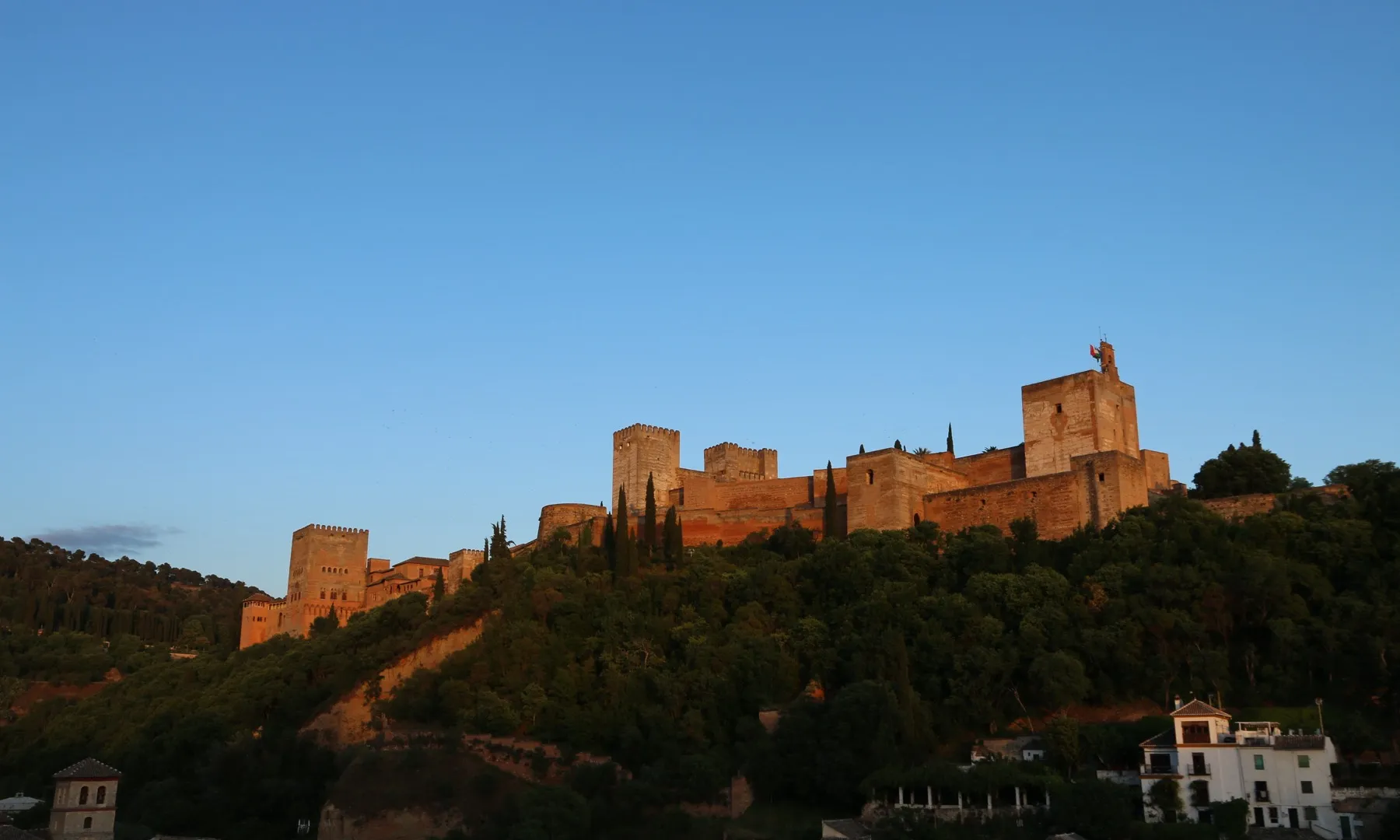
There's a moment that locals take for granted but that visitors find almost implausible: walking through the Albaicín in a t-shirt on a March Sunday, looking south and seeing Sierra Nevada completely white with snow 30 kilometres away. Climbing to the Mirador de San Nicolás, seeing the Alhambra with a snow-capped backdrop, and realising that in an hour you could be skiing.
That only happens in Granada. It's possibly the city's most extraordinary geographical argument.