Granada in a day is doable. It's not ideal — the city has too much for a single day — but if that's what you have, this itinerary is designed to get the most out of it without rushing or missing what actually matters.
Before we start: the only decision that matters is whether you have an Alhambra ticket or not. The rest of the day is built around that answer. If you have one, the morning is yours. If you don't — and you didn't book months in advance — don't expect to get one on the day. The alternative exists and is worth it, but it's a different experience.
Prefer a step-by-step plan with exact timings?
This guide covers the essentials. If you want a detailed route with ordered stops minute by minute, we have two ready-to-follow plans:
- 1-Day Route with Alhambra Entry — a 14-hour itinerary with ordered stops, tapas and sunset.
- 12 Hours in Granada Without the Alhambra — for those without Palace tickets who still want the full Albaicín and free monuments experience.
First: the Alhambra decision
The Alhambra sells a fixed number of tickets per day. In high season (March–October), they sell out weeks or months in advance. There is no ticket office where you can buy on arrival. If your visit falls in high season and you haven't booked, accept that you won't be entering the Nasrid Palaces on this trip — and plan your day differently.
The official website is alhambra.org. If you have confirmed dates and no ticket, check it before reading the rest of this guide. If there's availability, buy now.
Below: two itineraries — one with the Alhambra, one without.
Itinerary A: Granada in a day with the Alhambra
08:00 — Arrive early
If you're coming from Málaga, the first AVE leaves at 6:30 and arrives in Granada at 7:47. From Seville, the first direct train arrives around 8:00. From Madrid, the first-morning AVE gets you to Granada before 9:00.
The reason to arrive early is simple: the Nasrid Palaces at 8:30–9:30 are a completely different experience to the same palaces at 12:00. Fewer people, less heat, better light. If you have a first-entry slot, use it.
08:30 — The Alhambra: Nasrid Palaces
Go directly to the Nasrid Palaces at the time stamped on your ticket. Don't try to see the Alcazaba first if your timed entry is now — the Alcazaba can wait, the Palaces cannot. The access control system is strict about the timed window.
Time in the Nasrid Palaces: 75–90 minutes if you want to see them properly. The things you cannot skip:
- Patio de los Arrayanes: the rectangular pool with the reflection of the Comares Tower. The most iconic image of the Alhambra. Best seen when you first enter, before it fills up.
- Salon of the Ambassadors: the carved wooden dome with 8,000 interlocking pieces. To see it properly, stand in the exact centre of the room.
- Patio de los Leones: the most famous courtyard. The twelve original lions of the fountain date from the 14th century. Enter when it's least crowded — the first minutes of your entry window are the best.
- Hall of the Two Sisters: the most elaborate muqarnas dome in the entire Alhambra. 5,000 individually carved plasterwork cells.
10:30 — Alcazaba and Generalife
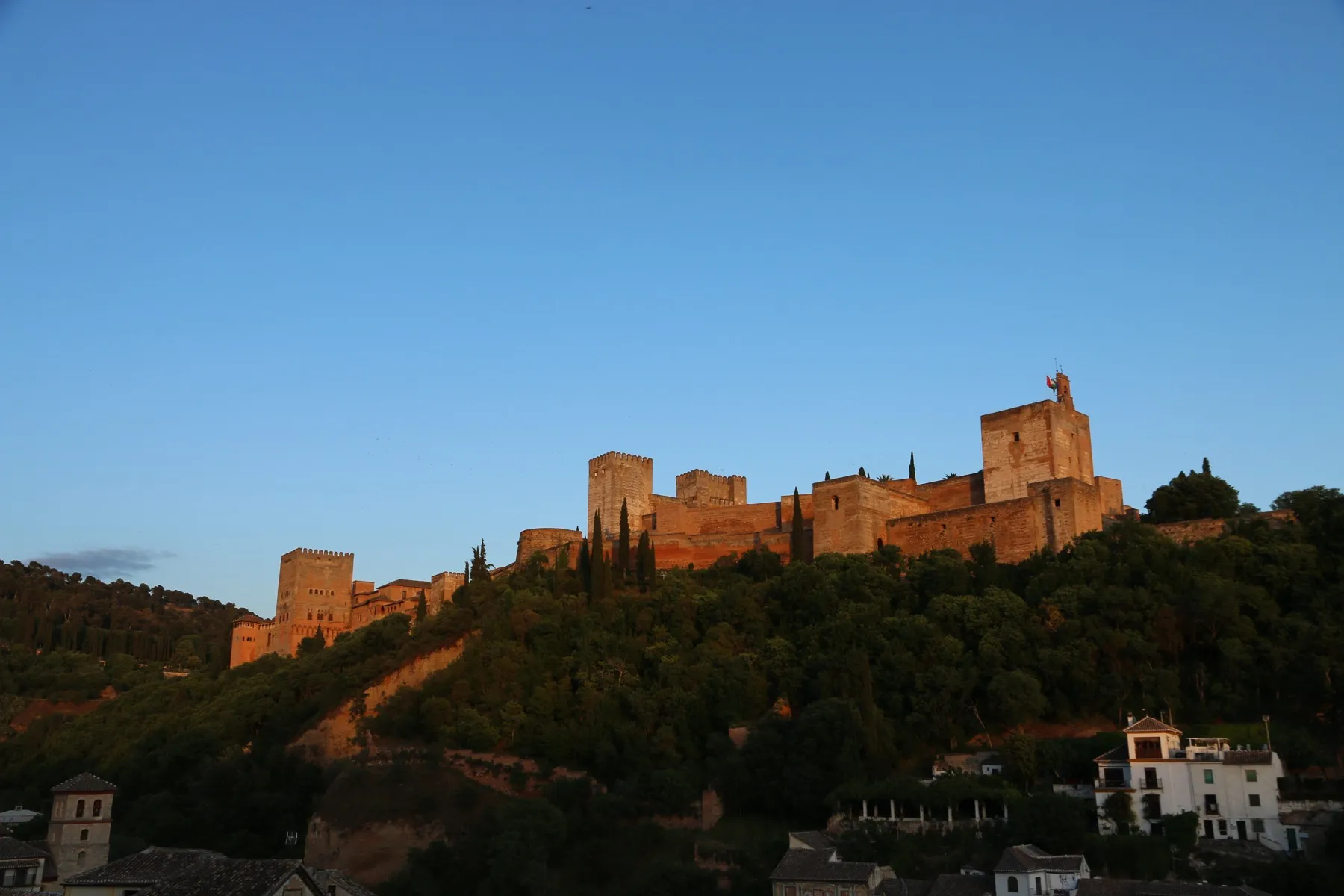
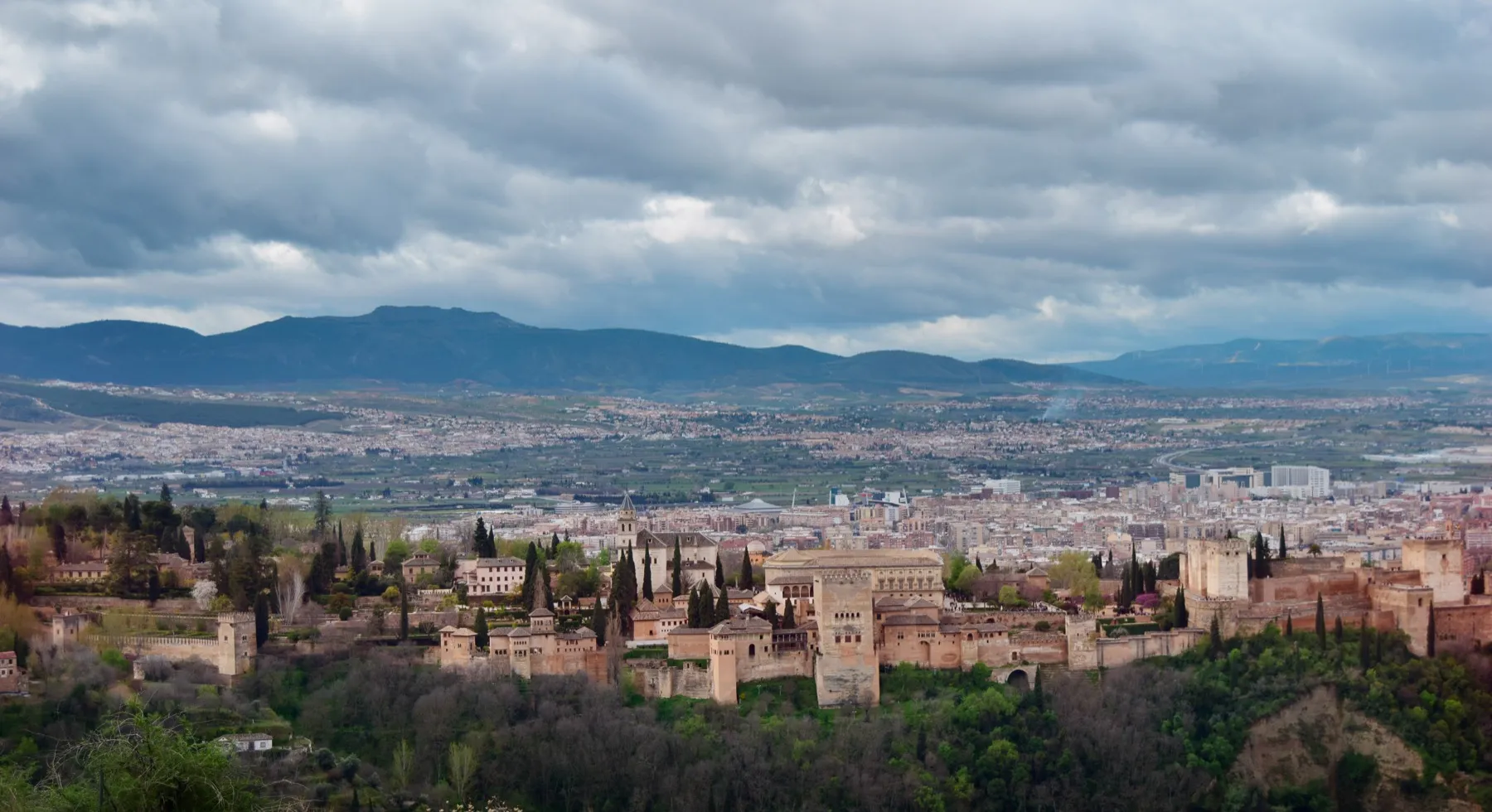
After the Palaces, the rest of the complex is yours to explore as you like. The Alcazaba — the military section, the oldest part — has the best views of Granada from the Torre de la Vela: the Albaicín opposite, the city below, Sierra Nevada behind.
The Generalife are the sultan's summer gardens. In spring (April–May) they're at their best: water running through the irrigation channels, roses, cypresses. In any season, the garden walk is the most peaceful part of the whole visit.
Total Alhambra time (Palaces + Alcazaba + Generalife): 3–3.5 hours at a relaxed pace.
12:30 — Down to the Paseo de los Tristes
The most beautiful descent from the Alhambra is through the Forest — the dirt paths between the trees surrounding the complex — to the Puerta de las Granadas, then down Cuesta de Gomérez to the centre. 20 minutes on foot.
At the bottom, turn right towards Carrera del Darro. The Paseo de los Tristes — the riverside walk along the Darro with the Alhambra directly overhead — is the Granada postcard tourists search for and locals use for breakfast. By 12:30 there's direct sun on the Alhambra.
13:00 — Tapas in the centre
You're hungry. This is the perfect moment for Granada's system: every drink comes with a tapa. Find any bar on Calle Navas, Calle Pescadería or around Realejo that doesn't have a menu in multiple languages stuck in the window.
Two rounds equal a complete meal. Price per person: €5–8. No reservation, no menu, no waiting. You order a drink, food arrives, you repeat if you want.
14:30 — Cathedral and Capilla Real
With a full stomach, the historic centre. Granada's Cathedral — one of the first Renaissance cathedrals in Spain — has paid entry (€5), but the main facade and the exterior space are worth stopping for even if you don't go in. Fifty metres away, the Capilla Real holds the sarcophagi of Ferdinand and Isabella.
If you want to go inside: the Capilla Real (€5) is the most interesting option in the historic centre. The sacristy holds Isabella I's personal belongings: her crown, jewellery, sceptre. The Cathedral can be left for a longer visit.
15:30 — Up to the Albaicín
The Albaicín is the medieval Arab quarter, a UNESCO World Heritage Site since 1994. Climb via Carrera del Darro — stopping at El Bañuelo if it's open (Tuesday to Saturday, 10:00–14:00) — or via Cuesta de las Chinas from the centre. The climb takes 20 minutes on foot.
Destination: the Mirador de San Nicolás. From there, the frontal view of the Nasrid Palaces with Sierra Nevada behind is the image you'll carry home from Granada. Best at sunset — if your return train allows it, wait for the sun to drop. The hour between sunset and full dark is the best.
17:30 — Descent and tea
Come down via Calle Panaderos or through Plaza Larga and stop for tea at one of the teahouses on Calle Calderería Nueva. Granada's Arab street has a concentration of Moroccan tea houses, honey pastries and their own atmosphere. A glass of mint tea and a pastry before heading back.
18:30 — Optional: Realejo and back
If you still have time before your train or bus: the Realejo neighbourhood, south of the Cathedral, is Granada's former Jewish quarter. Quieter than the Albaicín, with its own squares (Campo del Príncipe) and tapas bars for a final round before the station.
Itinerary B: Granada in a day without the Alhambra
Not entering the Nasrid Palaces doesn't ruin the day. Granada has enough outside the Alhambra for a full and worthwhile day. The difference is that you have the morning free for the Albaicín — which with the Alhambra in the plan always ends up being the second priority.
09:00 — Albaicín first thing
The Albaicín at 9:00 is different to the Albaicín at 12:00. The streets are nearly empty. Cats sleep on the cobblestones. The cármenes have their doors open and you can hear birds in the interior gardens. The neighbourhood without its tourist filter.
Climb via Carrera del Darro. Stop at El Bañuelo if it's open — 11th-century Arab baths, free entry, one of the city's least-known gems. Continue up to the Mirador de San Nicolás: at 9:30, with almost no one there, morning light on the Alhambra.
10:30 — Walk through the Albaicín
No fixed agenda. The streets between San Nicolás and Plaza Larga, around the Convento de Santa Isabel la Real, the descent via Calle San Juan de los Reyes. The Albaicín works without a guide — just go up and follow the slopes.
12:00 — Sacromonte
From the Albaicín, the Camino del Sacromonte leads to the cave neighbourhood in 20 minutes on foot. The path itself is worth it: views of the Darro, the Alhambra, the plain. Sacromonte at midday is quiet — the neighbourhood comes alive at night with the flamenco shows.
Climb to the highest point on the path: the views from there are the widest in Granada. Alhambra, Albaicín, Sierra Nevada, the farming plain. The Sacromonte Abbey at the far end has free entry on Sundays.
13:30 — Tapas in the centre
Same logic as Itinerary A: come down to the centre and eat on the tapa system. Calle Navas, Calle Pescadería or Realejo. Two rounds, €5–8 per person.
15:00 — Free monuments in the centre
Corral del Carbón (the only surviving Nasrid caravanserai, free access) + Madraza de Granada (the ancient Islamic university, free Monday to Friday). Two first-rate monuments most visitors don't know exist. Ten minutes each.
16:00 — Alhambra forest
The Alhambra as an archaeological site has paid entry. The forest surrounding it is free. Enter through the Puerta de las Granadas (at the top of Cuesta de Gomérez) and walk among cypresses and poplars. The Alhambra is visible through the trees. Arab fountains, the Pilar de Carlos V, partial views of the complex. One hour.
17:30 — Mirador de San Nicolás at sunset
If your return train is late evening or night, go back to the Mirador de San Nicolás for sunset. The view at dusk — with the Alhambra lit up and Sierra Nevada behind — is the day's best. It makes up for not having gone inside.
Where you're coming from: rough timetables
From Málaga
Direct AVE Málaga–Granada in approximately 1 hour. First trains: 6:30 (arrives 7:47), 7:45 (arrives 9:01). Last trains back: 21:00, 22:00, 23:00. With the 6:30 departure and a 22:00 return, you have 14 hours in Granada.
From Seville
AVE Seville–Granada in approximately 2 hours. First direct train: departs around 6:45, arrives approximately 8:50. Last train back: approximately 21:00. With 12 hours in the city, the full itinerary is comfortable.
From Madrid
AVE Madrid–Granada in 3h15. First train: departs 6:30, arrives 9:45. Last train back to Madrid: 19:30 (arrives Madrid 22:45) or 20:00. This gives you roughly 10 useful hours in Granada — enough for the full Itinerary A or B.
From Barcelona
AVE Barcelona–Granada in approximately 5 hours. With the first morning train you arrive around 11:00. In this case, adjust: go directly to the Alhambra if you have a ticket, or start with the Albaicín. You have roughly 7–8 usable hours.
The three mistakes the one-day visitor makes
Believing they'll get an Alhambra ticket on the day. That option doesn't exist in high season. The only way in is a ticket bought in advance at alhambra.org. If you arrive without one in July or August, accept the Plan B itinerary.
Trying to see everything. Granada in a day forces choices. If you have the Alhambra, the Albaicín will be a quick visit. If you prioritise the Albaicín, the centre's monuments will be a walk-through. Don't try to fit both in depth, plus Sacromonte, plus Realejo, plus the Cathedral, plus shopping. Leave Granada having seen two or three things well rather than ten things badly.
Eating at the first place near the Alhambra. Restaurants near tourist monuments charge double for half the quality. Walk down to the centre, to Calle Navas or Realejo. Fifteen minutes on foot makes a €15-per-person difference and half a quality star.
The question everyone asks: is Granada worth it for a day?
Yes. On one condition: come with the Alhambra ticket already bought — if that's what you want to see — or with the right expectation that the visit is an appetiser, not the whole city.
Granada in a day done well leaves you wanting to come back. That's exactly what it should do.
Take this plan with you
If you prefer a concrete route with ordered stops and timings: