Routes
GRANADA / HISTORY
HISTORY

A r a b G r a n a d a : t h e N a s r i d C i t y o n F o o t

" Two and a half hours through what remains of Islamic Garnata: the oldest Arab baths in Spain, the only surviving Nasrid caravanserai, the ancient Islamic university, and the recons… "

Duration 2h 30min
Distance 2.2km
Difficulty Easy
Best time Morning
HISTORY VOL. I · 2026 37°10′N 3°36′W
01
[ About the route ]

Description

Two and a half hours through what remains of Islamic Garnata: the oldest Arab baths in Spain, the only surviving Nasrid caravanserai, the ancient Islamic university, and the reconstructed souk built over the original 14th-century street grid. No guide, no group, no rush.

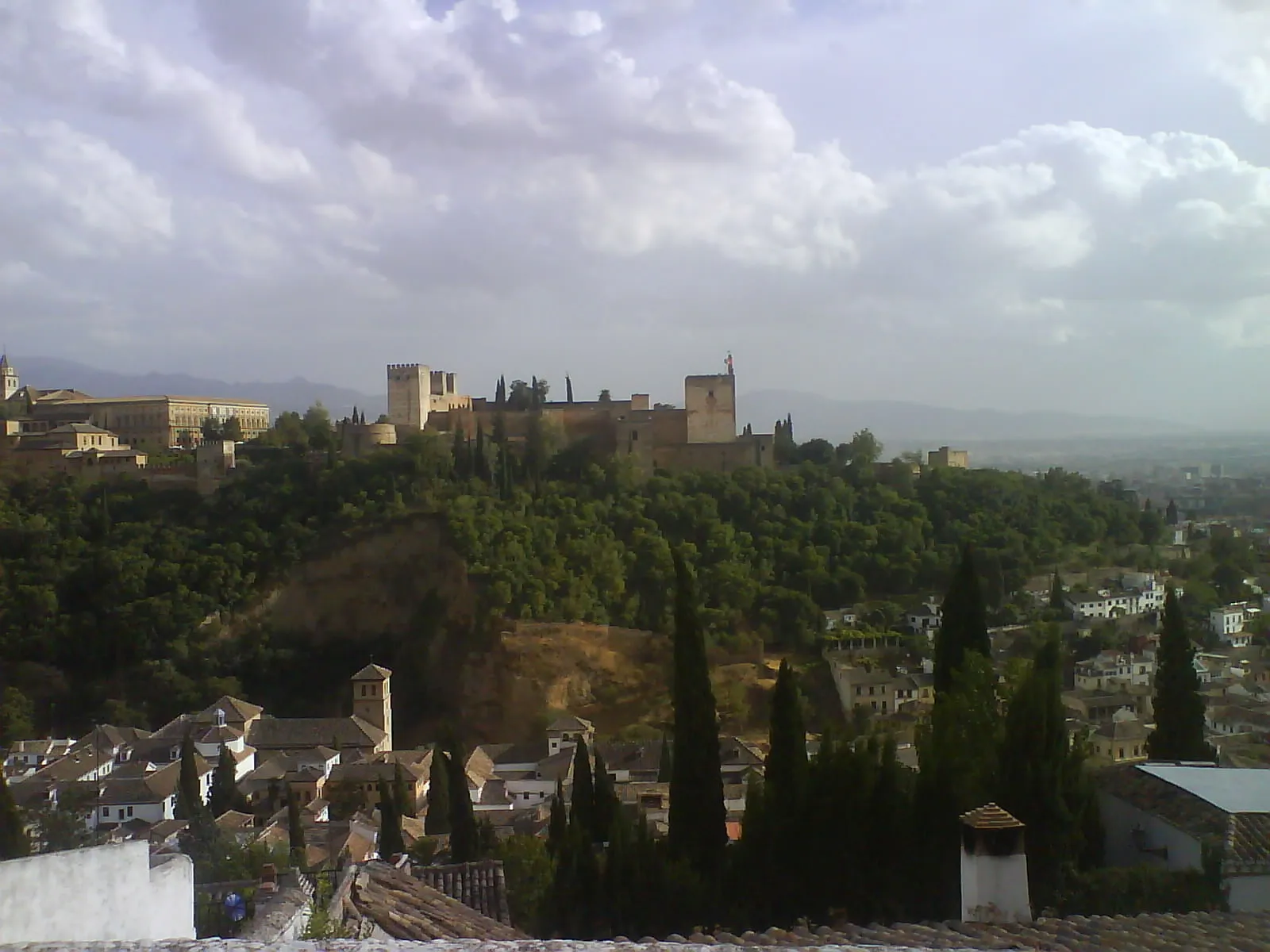
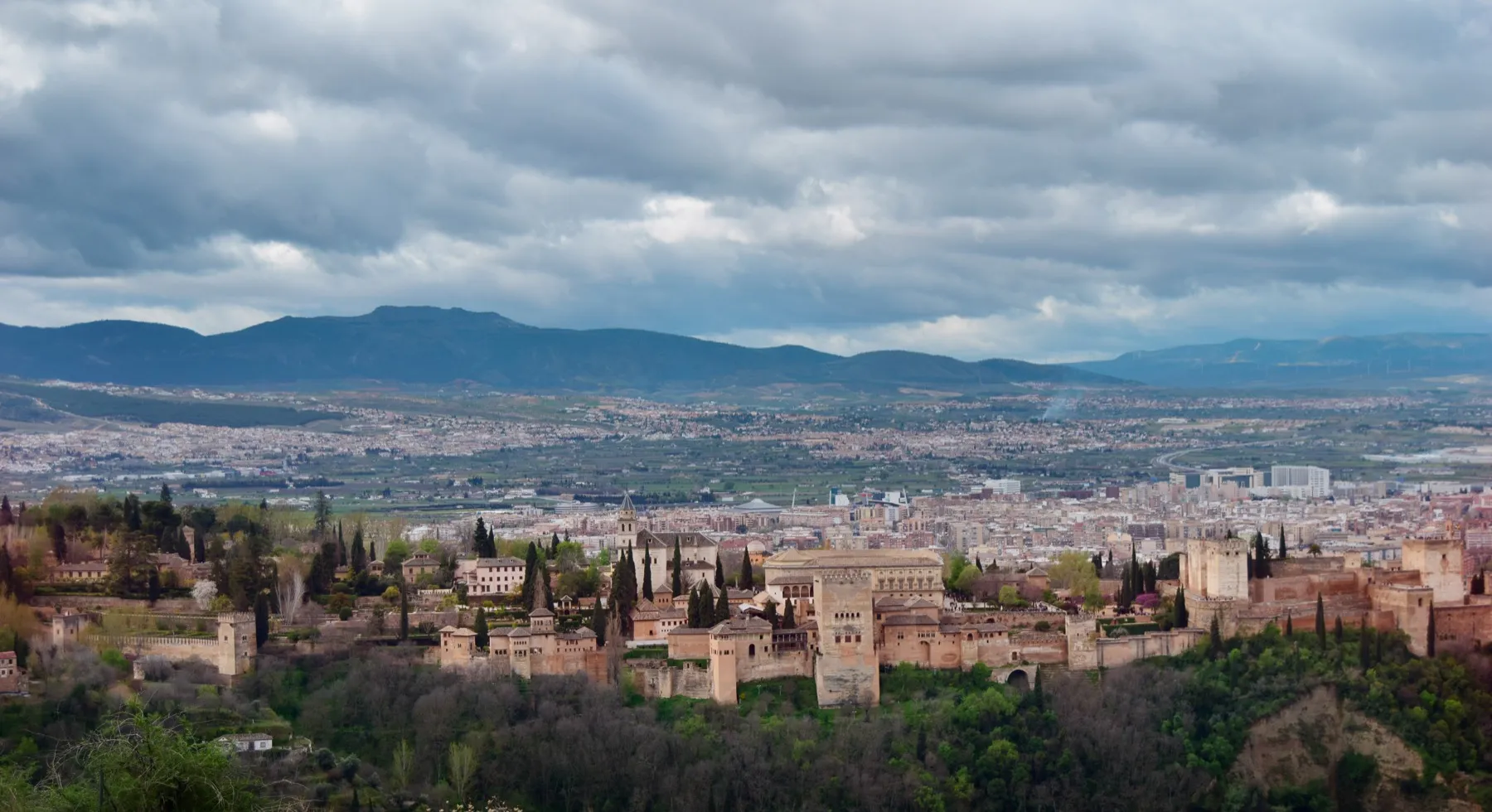
<p>Granada was for more than two centuries (1238–1492) the capital of the last Islamic kingdom on the Iberian Peninsula. While the rest of Al-Andalus fell, Nasrid Granada flourished: it built the Alhambra, expanded the Albaicín quarter, and raised mosques, madrasas, caravanserais, and hammams that can still be visited today.</p> <p>This route is not the Alhambra — that deserves a full day on its own. It is the urban fabric the Nasrids left at the foot of the hill: streets that remained streets, buildings that survived under different names, vestiges that Christian Granada chose to preserve out of usefulness or neglect.</p> <p>The itinerary starts at El Bañuelo, on Carrera del Darro — 11th-century Arab baths in better condition than any others in Spain. From there it moves into the historic centre: the Corral del Carbón, a Nasrid caravanserai and the only surviving building of its kind on the peninsula; the Madraza, founded by Yusuf I in 1349 as an Islamic university; and the Alcaicería, the silk merchants' souk reconstructed over the original Arab street grid.</p> <p>Two and a half hours, under two and a half kilometres, and no paid entry required. The Arab history of Granada can be read by walking, if you know where to look.</p>
02
[ ITINERARY ]

The itinerary

01

El Bañuelo — Carrera del Darro, 31

The best-preserved Arab baths in Spain. Built in the 11th century during the Zirid kingdom, they operated without interruption until the 16th century. The star room — brick vaults with eight-pointed star skylights to regulate light and temperature — is the most photographed space. Free entry. Open Tuesday to Saturday 10:00–14:00. Closed Monday.

02

Corral del Carbón — Calle Mariana Pineda, s/n

The only surviving Nasrid caravanserai on the entire Iberian Peninsula. Built in the 14th century as an inn and warehouse for Arab merchants, it survived because the Catholic Monarchs converted it first into a charcoal store (hence the current name) and then into a theatre. The muqarnas portal of the entrance arch is among the most elaborate surviving outside the Alhambra. Free entry every day, 9:00–20:30.

03

Madraza de Granada — Calle Oficios, 14

Founded in 1349 by Sultan Yusuf I as an Islamic university — the first on the peninsula. After the Conquest, the Catholic Monarchs bought it as the town hall. Of the original Nasrid interior only the oratory chapel survives, with a muqarnas dome and geometric tilework that the city council walled up for centuries and rediscovered in the 20th century. It is the most surprising space on the route. Free entry Monday to Friday, 10:00–14:00.

04

Alcaicería — next to the Cathedral

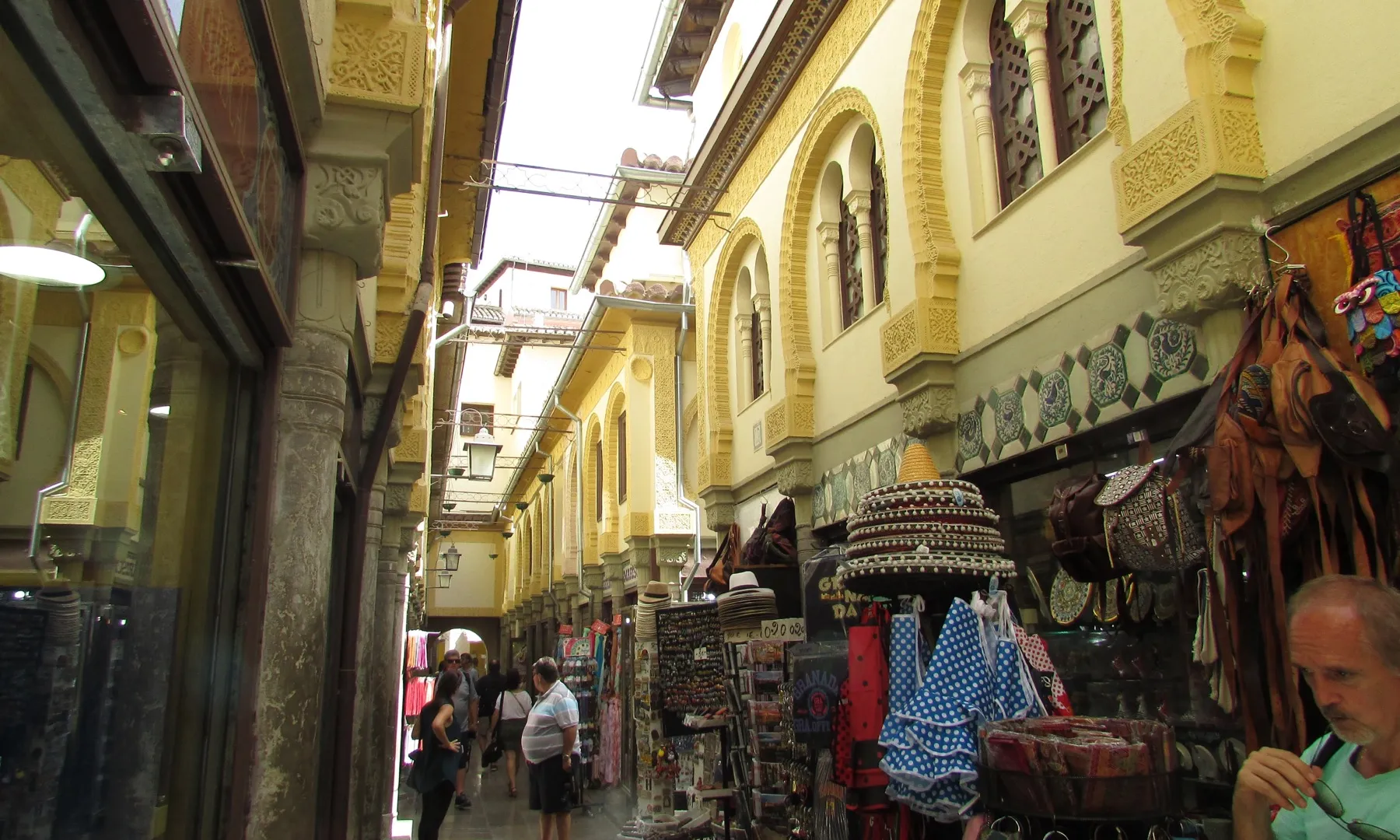
The Nasrid silk merchants' souk — the most protected and profitable commercial zone in the medieval city. The original was destroyed by fire in 1843; what you see today is a 19th-century Orientalist reconstruction built over the original Arab street grid. Walking its narrow alleys is still useful for understanding how Nasrid urban commerce worked: one street per guild, closed with gates at night. Today it sells local crafts and ceramics.

05

Puerta de Elvira — north entrance to the Albaicín

One of the best-preserved Nasrid arches still standing. It was the main northern entrance to the city, on the road from Córdoba. The horseshoe arch in exposed brick with its alfiz frame are characteristic elements of Nasrid military architecture. Today it is integrated into urban traffic, which makes perspective difficult, but it is worth the five-minute detour if time allows.

03
[ Recommendation ]

Local tips

Start before 10:00

El Bañuelo opens at 10:00 and has limited capacity — arriving five minutes early avoids a wait. The Carrera del Darro in the morning, without tour groups, is one of Granada's best walks.

The Madraza is only open in the morning

Hours: Monday to Friday, 10:00–14:00. If you do the route on a Thursday or Friday, include the Madraza early so you don't miss it. It is closed on weekends.

Have breakfast in a teahouse before you start

Calle Calderería Nueva, two minutes from El Bañuelo, has the highest concentration of teahouses in Granada. Moorish tea and msemen for under €5. It is the most fitting breakfast for the route you are about to walk.

The Alcaicería is not for shopping

The tourist volume means craft prices are at airport-level. Visit it to understand the street grid and souk history, not to shop. If you want quality Granada ceramics, there are better options in the Realejo.

04
[ Practical information ]

Route information

Starting point

El Bañuelo, Carrera del Darro 31. A 5-minute walk from Plaza Nueva.

Ending point

Puerta de Elvira, at the northern edge of the Albaicín. From here you can continue into the Albaicín or return to the center in 10 minutes.

How to get there

The starting point is on Carrera del Darro, accessible on foot from the center. By bus, lines C1, C2, 4, and 9 stop nearby. There is no parking on Carrera del Darro: use the Plaza Nueva car park.

Estimated budget

Completely free. None of the monuments charge admission. Add €5 if you have breakfast in a teahouse before starting.

Who is it for

Perfect for travellers with historical interest, art and history students, and those who want to understand Granada before 1492. Also for architecture photographers. It is a quiet route, without tourist crowds.

Accessibility

El Bañuelo has entrance steps. Corral del Carbón is accessible. The Madraza has access through the bookshop. The Alcaicería has flat streets. Puerta de Elvira is on a pavement next to a busy road.

Best time to visit

Start at 09:45 to be first at El Bañuelo (opens at 10:00). Morning light is ideal for photographing the Madraza dome. Avoid Sundays and public holidays: the Madraza is closed.

[ Tags ]
#historia#árabe#nazarí#bañuelo#madraza#patrimonio#mañana